
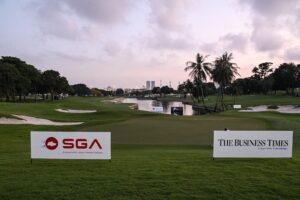
This month, an international field featuring some of the region’s leading players will gather at Sentosa Golf Club for the Singapore Open — a tournament that has long been a marker of the game’s standing in the region.
With its history dating back to 1961, the event made a strong return in 2025 to Singapore Island Country Club after it was last played in 2022. The prestige is further elevated in this year’s edition as the event will now be part of The Open Qualifying Series, with two spots awarded to players to qualify for The Open at Royal Birkdale in July.
The staging of the Singapore Open reflects the growing momentum of the sport locally. Singapore’s role as a host venue has also grown in stature. Events such as the HSBC Women’s World Championship and LIV Golf Singapore have brought world-class competition to the local community, while tournaments like the World Amateur Team Championships have demonstrated the country’s ability to stage international events.
Participation has broadened, not only through traditional club play but also via alternative formats such as simulators and short-form experiences, reflecting how the sport has adapted within a land-scarce environment. Today, more than 200,000 Singaporeans have taken up and played the sport.
Lim Eng Lee, CEO of NTUC Club, said: “We’ve been looking at ways to make golf more accessible by lowering the entry barrier and introducing alternative formats such as simulators at GreenBox by My Golf Kaki at Downtown East.
“These platforms allow more people to experience the game in a more flexible and affordable way, especially for those who may not have easy access to traditional courses. It’s about broadening how people engage with golf and meeting them where they are.”
Programmes like Get Golfing!, Golf in Schools and inclusion in ActiveSG Pesta Sukan reflect a collective effort to widen access while strengthening pathways. In 2025, Golf in Schools reached over 800 students, while the Disability Golf Programme engaged more than 250 persons with disabilities.
While participation has been encouraging, there are also signs of progress at the elite level. Recent performances by Singaporean golfers on regional and international circuits suggest a growing depth of talent, supported by increased exposure and competitive opportunities.
Victories on regional and international professional tours by Shannon Tan, James Leow and Nicklaus Chiam further reflect Singapore’s growing ability to compete on the global stage. The national women’s team also clinched a silver medal at the 2025 SEA Games — the first since 1991.
In a landmark moment for the sport, Tan also became the first golfer to be named The Straits Times Athlete of the Year, following her standout season, which included winning the Ladies European Tour Order of Merit.
“Singapore golf is at a really exciting point. I’ve seen firsthand how the landscape of golf here has evolved. There’s a stronger pathway now—from grassroots programmes to elite competition. Providing people access to the sport gives players the belief to compete internationally. The key moving forward is sustaining that momentum through continued support and opportunities.
“As a SGA professional, we’re seeing more players coming through with exposure and ambition, and that’s a direct result of the work being done by the SGA. For professionals like myself, it’s motivating to be part of this growth and to help raise the standard internationally,” said Leow.
Corporate support has played a role in sustaining this momentum, particularly in an environment where sport competes for both space and resources. Partnerships around key events, including the Singapore Open, highlight how collaboration between sport and business can contribute to both visibility and viability.
These developments, based on the Singapore Golf Association’s (SGA) three key pillars – developing the golf ecosystem, accelerating high performance and strengthening financial sustainability – have contributed to a more robust golf landscape in the country.
Joshua Ho, CEO of SGA said: “We’ve laid strong foundations for a vibrant golf ecosystem in Singapore, built on three key pillars. We will continue to balance growth with accessibility, ensuring the sport remains relevant while supporting high-performance ambitions.”
It has been a welcome development for 88-year-old Mok Kee Pean, who picked up golf in his late 30s.
“The golf scene in Singapore has improved over the past four years. I’ve seen more young people taking up the sport, stronger performances from our players, and more community engagement through charity events and social golf across different groups. As a player myself, it has been encouraging to still be part of such a welcoming and active golfing community,” said the Octogenarian.
The foundations are in place. What comes next will depend on how effectively stakeholders— from governing bodies to clubs, sponsors and the wider community — work together to build on this momentum.
The trajectory of Singapore golf will be shaped by the strength of its foundations — strong governance, growing participation and rising international credibility. The opportunity now lies in building on this momentum to shape the next chapter of Singapore golf.